
0 readers
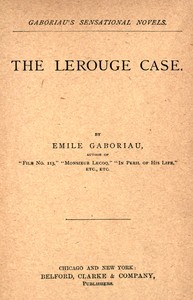
The Lerouge Case
by Emile Gaboriau
Category: Mystery
Status: Available
Source: Public Domain — Project Gutenberg
About This Book
"The Lerouge Case" by Emile Gaboriau is a detective novel likely written in the mid-19th century. The story introduces the mysterious death of Widow Lerouge, whose sudden disappearance leads her neighbors to alert the police. As the investigation unfolds, various characters—including the diligent investigating magistrate M. Daburon and the keen detective Tabaret—navigate through clues and testimonies to uncover the truth behind the crime. At the start of the novel, the residents of La Jonchere grow concerned about the absence of Widow Lerouge, prompting them to seek police intervention. Upon entering her cottage, authorities discover a scene of chaos and horror: the widow’s lifeless body, signs of struggle, and evidence suggestive of foul play. As investigators sift through contradictory witness statements and delve into Lerouge's past, they unearth tantalizing hints about her potential wealth and mysterious connections, setting the stage for the unraveling of a complex plot involving deception, hidden identities, and dark secrets tied to the widow's life. (This is an automatically generated summary.)
Preview
... (scroll to read more)
About This Edition
This edition of The Lerouge Case by Emile Gaboriau is catalogued on Libreya under Mystery and runs approximately 123,706 words — about 619 minutes of reading at an average pace. It is sourced from Project Gutenberg, the world's oldest digital library of public domain literature, founded in 1971 by Michael Hart, and every text on Libreya has been verified to be free of copyright restrictions in the United States. You can view the original Project Gutenberg edition here.
On Libreya, the text has been carefully formatted for comfortable reading on any screen — with consistent chapter navigation, adjustable font sizes, and four reading themes: light, sepia, dark, and night mode. Your reading position is saved automatically when you sign in, so you can pick up exactly where you left off across any device. The original text has not been altered in any way; what you read here is the same work as it appeared in its original published form.
About Classic Mystery Fiction
The golden age of mystery fiction produced some of the most enduringly popular works in literary history. The genre was essentially invented in the 19th century — Edgar Allan Poe's Dupin stories appeared in the 1840s, and Arthur Conan Doyle introduced Sherlock Holmes in 1887 — and the detective novel quickly became one of the most sophisticated and widely read forms of fiction ever created. Classic mysteries are more than puzzles to be solved: they are explorations of crime, justice, and human motivation that ask hard questions about what drives people to desperate actions, and about the nature of truth and the reliability of appearances. The detective figure — rational, observant, relentless — became one of the great archetypes of modern storytelling. Reading the original Holmes stories, or the early detective fiction that inspired them, is to encounter a genre at its freshest and most inventive, before its conventions became familiar enough to feel formulaic.